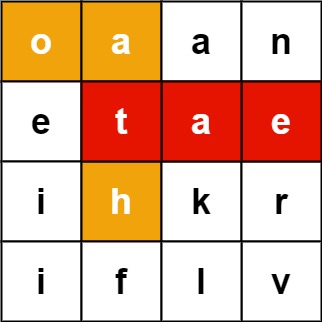
# time complexity: O(M(4*3^(L-1))) # space complexity: O(n) from typing import List class Solution: def findWords(self, board: List[List[str]], words : List[str]) -> List[str]: WORDKEY = "$" trie = {} for word in words: node = trie for letter in word: node = node.setdefault(letter, {}) node[WORDKEY] = word rowNum = len(board) colNum = len(board[0]) matchedWords = [] def backtracking(row, col, parent): letter = board[row][col] currNode = parent[letter] wordMatch = currNode. pop(WORDKEY, False) if wordMatch: matchedWords.append(wordMatch) board[row][col] = "#" for rowOffset, colOffset in [(-1, 0), (0, 1), (1, 0) , (0, -1)]: newRow, newCol = row + rowOffset, col + colOffset if ( newRow < 0 or newRow >= rowNum or newCol < 0 or newCol >= colNum ): continue if not board[newRow][newCol ] in currNode: continue backtracking(newRow, newCol, currNode) board[row][col] = letter if not currNode: parent.pop(letter) for row in range(rowNum): for col in range(colNum): if board [row][col] in trie: backtracking(row, col, trie) return matchedWords # time complexity: O(n*3^l) # space complexity: O(m) class TrieNode: def __init__(self, char=" "): self.char = char self.children = {} self.isEnd = False class Trie: def __init__(self): self.root = TrieNode() def insert(self, word): node = self.root for c in word: if c not in node.children: node.children[c] = TrieNode() node = node.children.get(c) node.isEnd = True def startsWith(self, prefix): node = self.root for c in prefix: if c not in node.children: return False node = node.children[c] return True def removeChars(self, word): node = self.root childList = [] for c in word: childList.append( [node, c]) node = node.children[c] for parent, childChar in reversed(childList): target = parent.children[childChar] if target.children: return del parent.children[childChar] class Solution: def findWords (self, board: List[List[str]], words: List[str]) -> List[str]: def dfs(trieForWords: Trie, node: TrieNode, grid: List[List[str]], row: int, col: int, result: List[str], word=""): if node.isEnd: result.append(word) node.isEnd = False trieForWords.removeChars(word) if 0 <= row < ROW and 0 <= col < COL: char = grid[row][col] child = node.children.get(char) if child is not None: word += char grid[row][col] = None for dR, dC in [ (0, 1), (1, 0), (-1, 0), (0, -1)]: dfs(trieForWords, child, grid, row + dR, col + dC, result, word) grid[row ][col] = char ROW = len(board) COL = len(board[0]) trieForWords = Trie() result = [] for word in words: trieForWords.insert(word) for r in range(ROW): for c in range(COL): dfs(trieForWords, trieForWords.root, board, r, c, result) return result board = [["o", "a", "a", "n"], ["e" , "t", "a", "e"], ["i", "h", "k", "r"], ["i", "f", "l", "v"]] words = ["oath", "pea", "eat", "rain"] print(Solution().findWords(board, words))